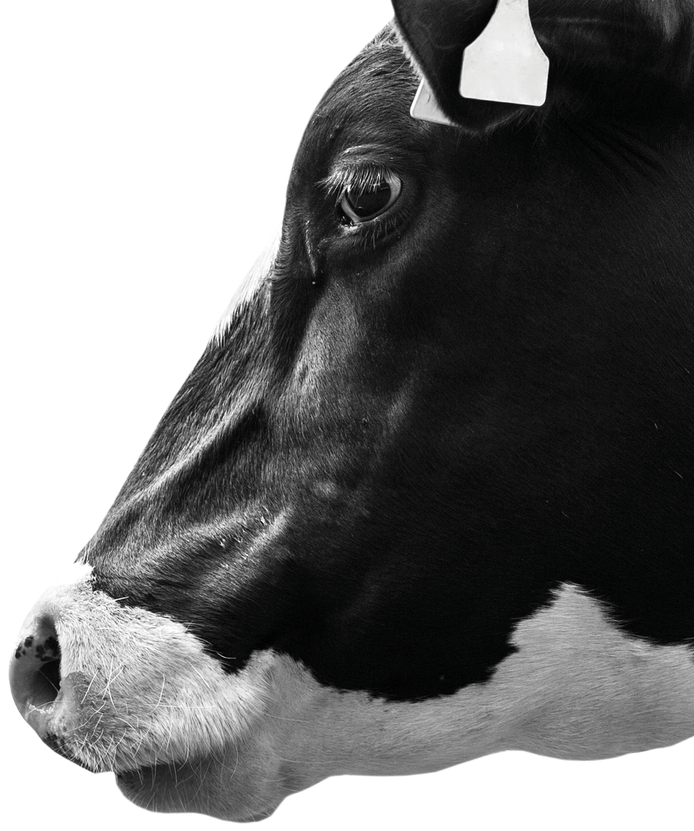
2025 NMR RABDF Gold Cup Finalists Morrow of Ladock, Truro

A dairy business from Ladock, near Truro, Cornwall, has made the final five in the industry’s top national award, the 2025 NMR RABDF Gold Cup competition.
The family run dairy farm, T N Morrow, is competing with four other finalists and the winner will be announced at Dairy Tech on February 4, 2026.
Paul Broad and his wife, Wendy (née Morrow), together with Wendy’s brother, Irwin Morrow, and Paul and Wendy’s sons, David and Philip, carry out all roles on the farm, from milking cows and rearing calves to planting and harvesting forages. Cows are milked twice a day, mainly by Paul and Wendy, through a rapid-exit parlour. The family has made considerable investments in the past decade for the next generation, with a new dairy unit in 2018 and a new youngstock unit in 2023. More improvements are planned, such as covering the silage pits.
The pedigree Maymor Holstein herd has doubled in cow numbers in the past 14 years, to the current 481 milking cows and 461 youngstock followers, on the 280-hectare unit. About half the area grows grass for a multicut silage system, with maize and winter wheat grown on the rest. This provides forage for the herd.
The milking cows are kept in three groups; heifers, cows and barren/stale animals. All groups are fed a single full TMR, comprising grass and maize silage, rolled wheat, ground maize and a protein blend, along with minerals, yeast and protected fats. The feed rate is 0.34kg/litre. Rationing is done under the guidance of Northern Ireland-based nutritionist Jeremy Hamilton, who has worked with the family since 2010.
The herd is closed, and all replacements are bred on the farm. The focus is to breed high genetic merit animals with type traits that favour longevity.
While milk yield has never been a priority in the breeding plans, a combination of genetics, high health and welfare and excellent housing, has boosted production to a current average milk yield over 12,000kg.
High fertility levels are achieved. Sexed semen is used twice on heifers and on about 40% of the milking cows, and now they are up to capacity in the herd, surplus heifers will be sold.
Milk quality is closely monitored and with the latest results showing a somatic cell count of 112,000/ml and a Bactoscan of 10, alongside consistent fat and protein, this eye for detail is clearly paying off. Mastitis control has been a focus, and rates of clinical mastitis are now reducing markedly.
Herd health is a high priority. The herd is BVD free and routine testing for Johne’s through NMR’s HerdWise quarterly testing service shows a decline in infection level in the herd, from an average test value (ATV) of 11.7 in June 2020 to the current ATV 2.5.
This progress in controlling Johne’s has been achieved by adhering to strict biosecurity measures to limit future infections. Calves are removed promptly at birth, and scrupulous colostrum management—including pasteurisation of all colostrum—is followed. Colostrum from infected cows is discarded, and these animals are bred to beef sires.
Herd health planning is carried out with their vets, Giles and Parson Farm Vets at Camelford and a selective dry cow programme now has 80% of cows dried off without antibiotic treatment. This is improving year-on-year. Antibiotic usage has also reduced and sits well below RUMA targets in all areas.
Youngstock rearing is the jewel in the crown on this unit, with mortality rate in heifers from birth to 28 days at 0.4% and 0.73% from one to six months old. Low mortality levels have been consistently achieved during the past six years, since David began recording this as part of his Arla contract. Thanks to good growth rates and a high health status, the age at first calving is 23.5 months.
Getting it right from the start and having fit healthy heifers joining the herd is a major contributor to the business efficiency and the aim is to promote this across the business.
Making every acre count, by improving soil health, reducing fertiliser use, while improving forage quality and milk from forage, and using fewer antibiotics will help to future-proof the business. The success of this, Paul believes, will be underpinned with a quality long lasting cow.
T N Morrow - Key facts:
- Livestock: 471 cows, 461 followers
- Milk yield (12 month rolling average):12,362kg, 4.26% fat and 3.44% protein
- Milk from forage: 4,082 litres (33%)
- Pregnancy rate: 30%
- Somatic cell count: 112,000 cells/ml, Bactoscan 10
- Mastitis rate: 21 cases /100 cows
- Calving interval: 389 days
- Age at first calving: 23.5 months
- Milk buyer: Arla