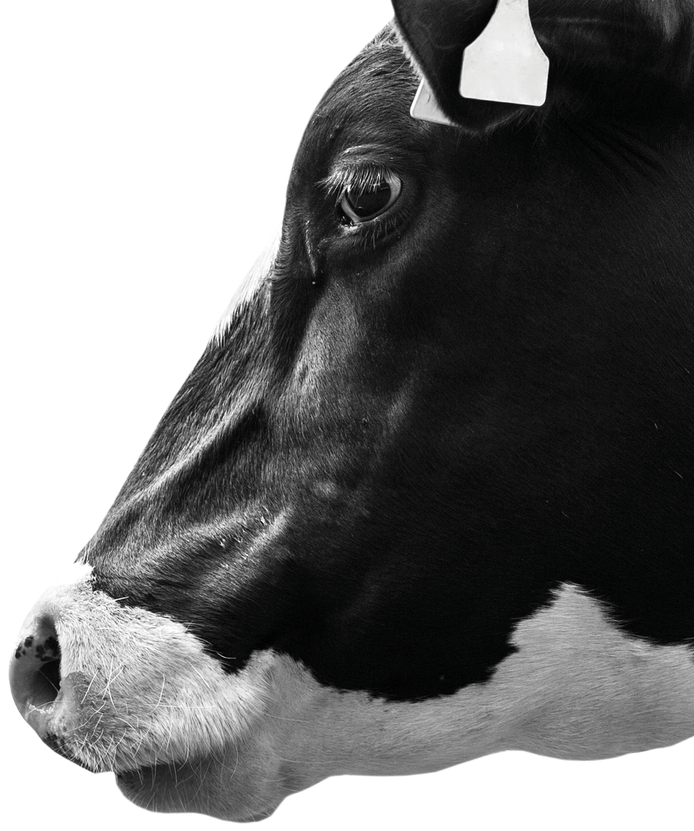
2025 NMR RABDF Gold Cup Finalists Ashleys of Cantlop, Shrewsbury

Stephen and Ruth Ashley’s dairy business, based in Cantlop, Shrewsbury, has made the final five in the 2025 NMR RABDF Gold Cup competition.
This is the second year running that the high-performance Holstein herd, managed by a team of five including Stephen and Ruth, with weekend relief workers, has made the final round.
Cows are housed year-round on the 162-hectare dairy unit and milked through a robotic system which has been in place for 12 years. This system produces a wealth of information, which is used by each member of the team, their vet and nutritionist to ensure decisions and actions are data-driven
Since taking on the running of the farm from Stephen’s parents in 2011, the couple have delved into each area of herd management to see how they can progress the business. All protocols are carefully documented to ensure consistency, and a detailed herd health plan, drawn up by Shropshire Farm Vets, is adhered to.
Genomic testing has recently been adopted in this all year round calving herd, and all heifer calves are now tested from birth. This will allow greater genetic improvement in key areas; milking speed, yield, fertility, health - no mastitis or mobility issues - and teat confirmation must be met to keep pushing the herd forward. This will also promote an improved carbon footprint; an area that features high in their list of priorities.
They have recently been accepted onto the Dairy Carbon Network project and look forward to being involved and adopting the technology that can help increase their efficiency across the business. The current carbon footprint for the farm is 1.266 CO2e/kg milk.
Currently 80% of heifers, first lactation cows with good health and genetics producing more than 12,000kg of milk and second lactation cows producing more than 18,000kg of milk are served with sexed semen. All other cows, heifers and progeny of Johne’s infected cows are bred to Aberdeen Angus sires, and a proportion of beef animals are reared on the farm.
Getting calves off to the best possible start is vital and they have comprehensive guidelines - set out in a handbook – for staff to follow. Again, to support efficiency and reduce their carbon footprint, they target good health and growth rates. Improving these has led to a reduction of about six weeks in age at first calving since 2021, to the current 22.6 months.
Calf health is supported with a full vaccination programme and Tag and Test is used to detect any BVD infections. Lung scanning has been introduced in the past 12 months, and the results have led to a reduction in antibiotic use and improved growth rates.
A mortality rate of 2% from birth to calving down has been achieved.
A policy of prevention rather than cure is extended to the milking herd, and bulk milk tests are carried out for IBR, leptospirosis and Neospora. All cows are screened quarterly for Johne’s through NMR’s HerdWise service. Strict biosecurity and colostrum management has reduced infection rates, and Johne’s levels are now very low, with no red cows.
Cows are bedded on deep sand which is raked three times a day and topped up once a week. Lime is also added as an extra measure. This has helped to reduce mastitis year-on-year and the rate is now 2.5 cases per 100 cows per year.
Antibiotic use has been reduced in the past few years to 12.8mgPCU, and only 10% of cows get antibiotics at drying off, thanks to a selective dry cow treatment plan.
Cows are mobility and body condition scored monthly by Ruth, and thermal imaging is used to detect early cases of lameness. A foot trimmer visits the farm fortnightly to treat any problems and to trim cows prior to drying off.
Currently, 99% of cows have a mobility score of 0 to 1%.
Team building is a vital ingredient to cow care and performance and to the Ashley’s business. So, while they can help in all areas, each has specialised interests, and responsibilities to play to their strengths.
Looking ahead, effort is targeted at increasing milk from home grown forage. Cows are fed a total mixed ration based on a multi-cut grass silage. They grow maize and make their own haylage and hay. Straw is purchased off farm.
Concentrates are fed through the robots according to yield and dry matter intake. Current total concentrate use including TMR is 16.7kg per cow per day.
Looking ahead, plans are being made to extend their use of renewables with more solar, increase milk from forage by improving forage quality, and improve slurry handling
Despite Stephen and Ruth’s two children being only nine and 11, the couple are focused on increasing economic and environmental efficiency and creating a sustainable business for future generations.
“We joked about winning the Gold Cup a few years; ago,” says Ruth. “We never imagined we’d get this far – into the final round. Last year was a valuable learning experience. We found the judges’ comments very encouraging.
“We showcased the farm much better this year, when the judges visited,” adds Ruth. “Hopefully we’ll have done even better.”
Key facts - Stephen and Ruth Ashley:
- Livestock: 130 cows, 110 youngstock, 77 beef cattle
- Milk yield (12 month rolling average): 16,410kg, 3.91% fat and 3.29% protein
- Milk from forage: 4,100 litres (25%)
- Pregnancy rate: 35%
- Somatic cell count: 106,000 cells/ml, Bactoscan 8
- Mastitis rate: 2.5 cases per 100 cows per year
- Calving interval: 369 days
- Age at first calving: 22.6 months
- Milk buyer: Müller (Co-op contract)