BASICS PROVIDE FIRM FOUNDATION FOR PROGRESS IN TOP HERD

Consistent improvements in performance through managing cows based on reliable data have helped to keep one Cornwall-based dairy herd in the top tier in NMR’s Annual Production Report
Paul George’s pedigree Hartom Holstein herd now numbers 320 cows and 120 followers – a far cry from the family’s 40 cows and contracting business in 2008. That’s when Paul, who is the third generation of the family to take on the herd based at Tresillian near Truro, decided to develop the dairy business.
Now with the help of six full-time staff and 12 part-time and casual staff, he manages the fully housed, all-year-round calving herd on the 243-hectare unit that grows grass and maize for silage, as well as youngstock grazing.
High milk solids production has placed the herd in NMR’s top 15 nationally for combined fat and protein for the past five years.
Improved production and milk solids haven’t come at the expense of a high health status and good fertility, which are carefully managed on an individual-cow basis, via NMR. The information is imported from NMR’s Herd Companion onto the Uniform Agri dairy management system and used by the unit’s staff and advisers.
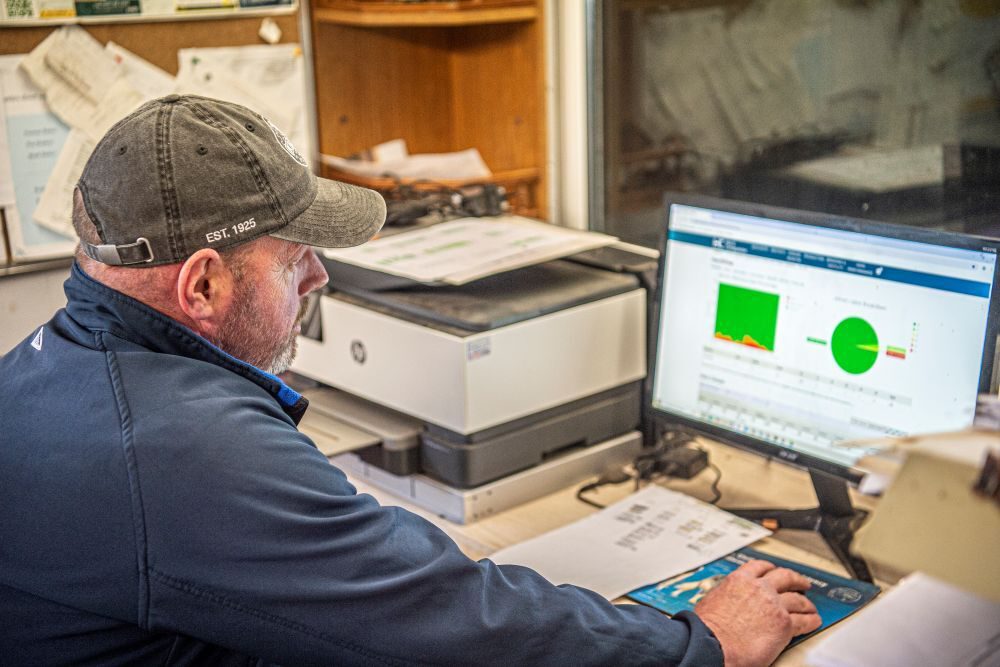
“It all starts with the basic recording,” he says. “We record once a month,” he says and if all we were to glean from our NMR records is an analysis of each cow’s milk components, her somatic cell count and the herd’s routine Johne’s HerdWise report, then we’d be happy,” says Paul.
He reflects on the early days, when he and his advisers would trawl through the ‘pink pages’ to pick out any problem cows and use the action lists. “We get a lot of added value now as the analyses from the dairy management systems keep getting better and more relevant to our own needs.”
Solids boost
During the past decade, the herd average milk quality has improved by approximately 1% fat and 0.58% protein, from 3.95% fat and 3.15% protein rolling averages in 2016. In February 2026, the herd achieved its highest results of 4.9% fat and 3.73% protein with a rolling average combined fat and protein of 1,060kg per cow on three-times-a-day milking.
“The milk-quality increases have exceeded our expectations,” says Paul. “We’re targeting 5% milk fat, which is a great achievement at our level of production.”
The drive to improve constituents came in 2016 when they signed up with Cornwall’s Creamery, Roddas, which rewards for milk solids. “We put more emphasis on milk solids when selecting sires without compromising yield or health traits. And we chose dams based on their fat and protein production, avoiding breeding from any problem cows,” explains Paul.
Working with breeding advisers from Cogent and Alta, Paul continues to put emphasis on constituents in the mating programme and combines this with attention to detail in management and a finely balanced ration formulated by herd nutritionist Jeremy Hamilton.
The feeding system is simple. Freshly calved cows are fed in the parlour, at a rate of 1.5kg a day of concentrate for the first 60 days, which is split across three milkings. This is in conjunction with the milking herd’s TMR, which comprises grass and maize silage and includes a 40% protein blend and caustic- treated wheat.
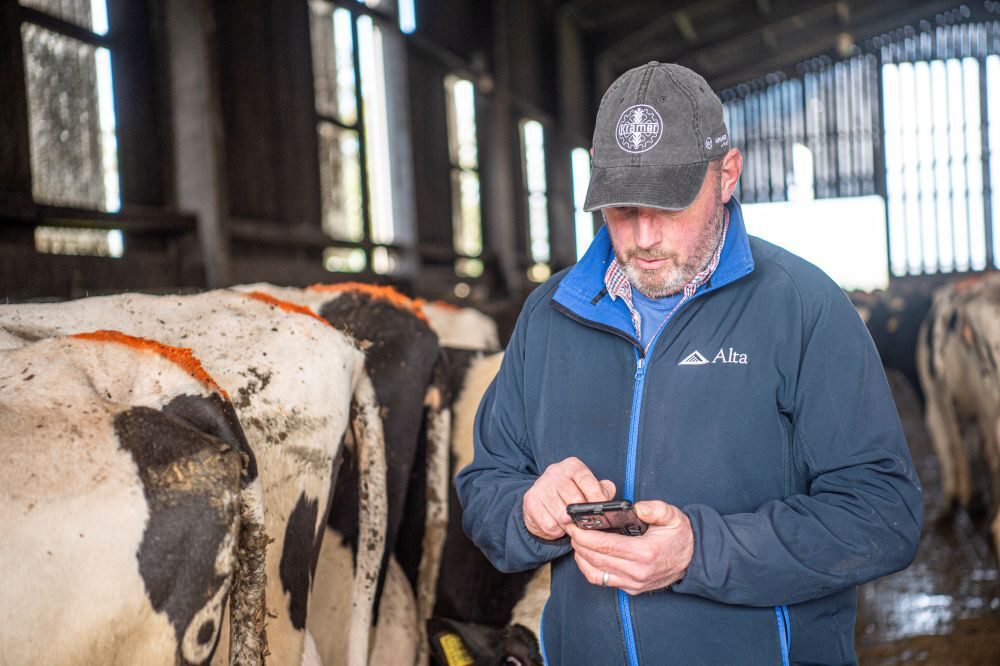
Jeremy monitors cow performance via production records accessed through Herd Companion and Uniform Agri. He tweaks the ration if production deviates off target and keeps a watchful eye on dry matter intakes and the availability and price of high quality ingredients.
High quality, hygienic milk, good yields and a high health status are our goals,” says Paul. He acknowledges his team’s attention to cow care and feeding and their commitment to milking routines that promote herd health and fertility.
“Just ‘doing enough and getting away with it’ may be fine, but it’s not reliable for ensuring consistently high results. You get out what you put in,” he adds.
In 2025, the herd’s average SCC was 82,000 cells/ml. And a calving index of 392 days was achieved with a pregnancy rate of 28%.
“Overall herd health trends are good, and thanks to the skill of our vet consultant Philip Elkins, who analyses our cell count data on Uniform Agri, our use of antibiotics, particularly at drying off, has nose-dived.
“We set high benchmarks, using antibiotics at drying off on any cow with a cell count above 100,000 cells/ml or producing more than 30kg of milk per day,” says Paul. “Even so, less than 25% of our cows are treated. Our drying off list each Thursday has very few cows listed for antibiotic treatment now.”
Johne’s journey
Johne’s disease control is another area that’s kept under constant scrutiny at the unit and all cows have been screened quarterly using NMR’s HerdWise service since 2014. “It’s a journey and one you need to be on with your vet,” says Paul. “Although we’ve only two cows with low levels of infection, we won’t ever stop monitoring.”
The herd’s current Average Test Value (ATV), which is the numerical average of the herd’s Johne’s milk test results at any given time, is 4.2. This is well within the National Action Group on Johne’s target ATV of 5.5 for the GB dairy herd by 2030.
Even when the herd was being tested every 60 days for TB, they managed to time Johne’s testing before the TB test. “TB testing shouldn’t be an excuse not to do Johne’s testing,” he says.
If, in the future, core milk litres from his milk processor become available, adding a few more cows to the herd may be on the agenda. “We could go up to 365 cows with our current facilities,” says Paul. “That will do for me. It will then be up to the next generation to take it forward,” he adds, referring to any of his four children who may decide to build dairy careers.
“We’ll keep improving with what we have now, using robust data to run a sustainable herd. There’s a lot of uncertainty in the marketplace and I don’t think we could have predicted the events of the first few months of 2026. But if we’re recording and controlling as much as we can on the farm, it will help us weather the storms.”