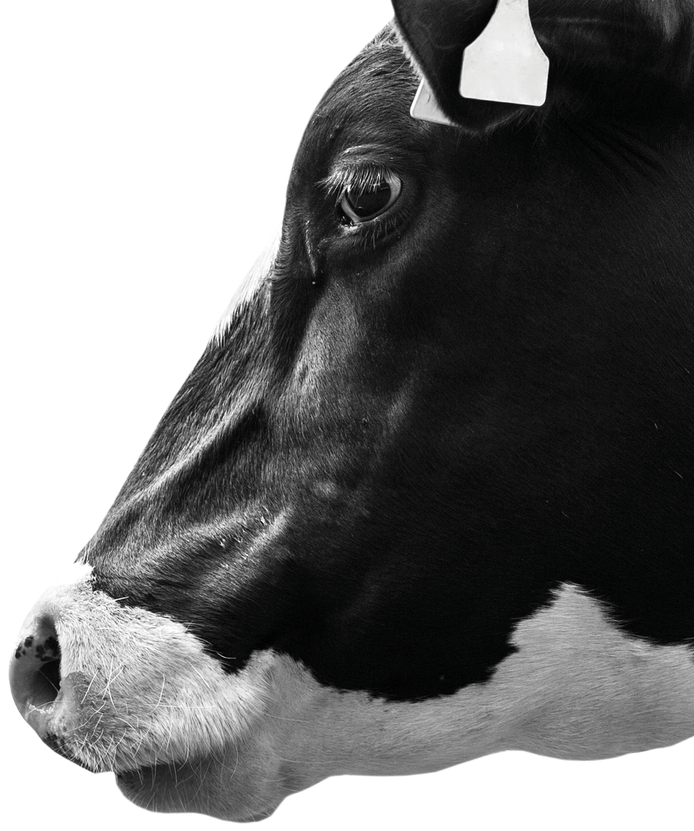
2025 NMR RABDF Gold Cup Finalists Yeo Valley Farms

Yeo Valley Farms, Somerset, has made the final round of the 2025 NMR/RABDF Gold Cup
Yeo Valley Farms is well known for its pedigree British Friesian Lakemead herd. Two dairies and a youngstock unit are part of a mixed farming business, operating an integrated regenerative organic system over 800 hectares at Blagdon, in north Somerset.
Cows at the Yoxter dairy calve from April to May, while the Holt Farm herd calves in a block from September to December. Both herds are milked twice a day through a Trigon Westfalia, and the milk goes to the company’s processing site, situated is within a few miles of the farms.
The farm business is managed by Richard Greaves with unit managers Gabby Veater and Steve Laurie. William Mayor is responsible for the overall business development of the farms, including the arable enterprises.
The dairies play a key role in Yeo Valley’s regenerative system, which is integrated with the sheep, arable and dairy beef that graze in the woodland pasture to help promote a fully functional farm ecosystem.
Working with Siobhan Griffin of Next Level Grazing, the dairy unit platforms operate a regenerative grazing strategy to achieve optimal recovery of diverse herbal leys before the next grazing.. The system builds grazing resilience to help to mitigate the impact of more extreme seasons.
The strong and versatile characteristics of the British Friesian suit the farm, and the Lakemead herd is renowned for supplying balanced and resilient animals, including stock bulls, and genetics nationally and internationally. The herd has bred well-known sires, including Lakemead Jingle, Pinnacle and, more recently, Scirocco and Zephyr.
All replacements are homebred and 20% of the herd is replaced annually. The herd has been closed since 1961. The best cows, exhibiting good longevity and on farm performance, form the main breeding stock, with some heifers being selected with strong family lines. British Friesian sires are chosen to ensure genetic diversity is maintained and individual matings use classification and cow performance records to aid decision making.
Cows not seen bulling by 30 days post calving are presented to the vet, and the diet is revised if required.
A specialised youngstock unit, Beech Farm, rears heifer replacements for the two dairy units, and houses a beef enterprise to rear all calves from the dairy herds.
A herd health plan is managed with their vet north Somerset-based Tibbs and Simmons, with particular focus on high welfare and preventive strategies.
Calf and heifer rearing and hygiene protocols are followed closely, including strict colostrum management, whole milk for 12 weeks, a vaccination programme and routine weight monitoring. The 1% mortality from birth to calving reflects the high standards achieved in youngstock rearing.
Cows are routinely screened for Johne’s infection through quarterly milk samples. The average test value, which is the herd’s Johne’s infection rate, has reduced from 11.6 in 2017 to 7.8 in 2025. Selective breeding, improved hygiene and introducing separate calving areas for any infected cows has aided this improvement.
Housing has been designed with animal welfare and behaviour in mind. The bedding conditioner Eazybed is used in cubicles with sawdust to reduce the risk of udder infection and mastitis. Cows are monitored daily for lameness, and any problems are treated immediately with feet are routinely trimmed 60 days into lactation and at drying off.
Diets are based on home grown forage, with an arable platform of 251 hectares providing feed for all the livestock enterprises, with crops such as pea, oats and barley, blue lupins and spring wheat, and wheat-bean mixes. The farm grows no monocultures, and cover crops are used extensively in the rotation to increase soil health, build fertility and provide winter fodder for sheep.
The farm has a five-year ambition to move towards 100% homegrown feeds, which William admits is a challenge. They have carried out more accurate analysis of silages using NIR and wet chemistry to help improve use of forages.
A trial to identify the best protein crops to grow on the farm and to provide bypass protein in the diet has been carried out and as a result, blue lupins and spring wheat grown as a bio crop and crimped are proving to be a step in the right direction.
In the summer months, the cows graze diverse herbal leys, with a small buffer feed given before milking. During the winter, the cows are fed herbal ley silage, whole crop (wheat and beans), crimped (blue lupins and wheat), and a protein blend, with additional parlour cake provided on a feed-to-yield basis.
The farm is engaged on an extensive Countryside Stewardship scheme, which supports their objectives of keeping biodiversity central and, in the case of the dairy, producing high quality, natural organic milk.
Key facts – Yeo Valley:
- Livestock: Spring calving - 100 cows, autumn calving - 220 cows, 130 followers
- Milk yield: 7,725kg, 4% fat, 3.3% protein
- Milk from forage: 2,400 litres
- Pregnancy rate: 30%
- Somatic cell count: 155,000 cells/ml Bactoscan: 24
- Mastitis rate: 17 cases per 100 cows
- Calving interval: 372 days
- Age at first calving: 25.5 months
- Milk buyer: Yeo Valley- South West Organic Milk Pool